Roofing
Roof Moss Removal: 6 Steps Before Rainy Season
Those soft green patches on your roof might look harmless during the dry months, but they can become a real problem once the rain returns. Roof moss removal is one of the simplest ways to protect your shingles or tile before winter storms roll through San Diego County. Moss holds moisture against your roof, creeps under edges, and slows drainage. Homeowners in shaded, wooded areas like Julian tend to notice it first. The good news is that a little prep work in early fall goes a long way. If moss has already caused damage, you can lean on a team that specializes in restoring lifted shingles and weathered residential roofs before leaks start.
Here’s what this guide covers:
- Why moss grows: The conditions that invite moss onto Southern California roofs.
- Six steps: A clear process for removing moss safely before the rainy season.
- Method comparison: How common removal options stack up on safety and results.
- Prevention tips: Simple habits that keep moss from coming back.
- Common questions: Straight answers to what homeowners ask most.
Why Moss Takes Hold on Your Roof
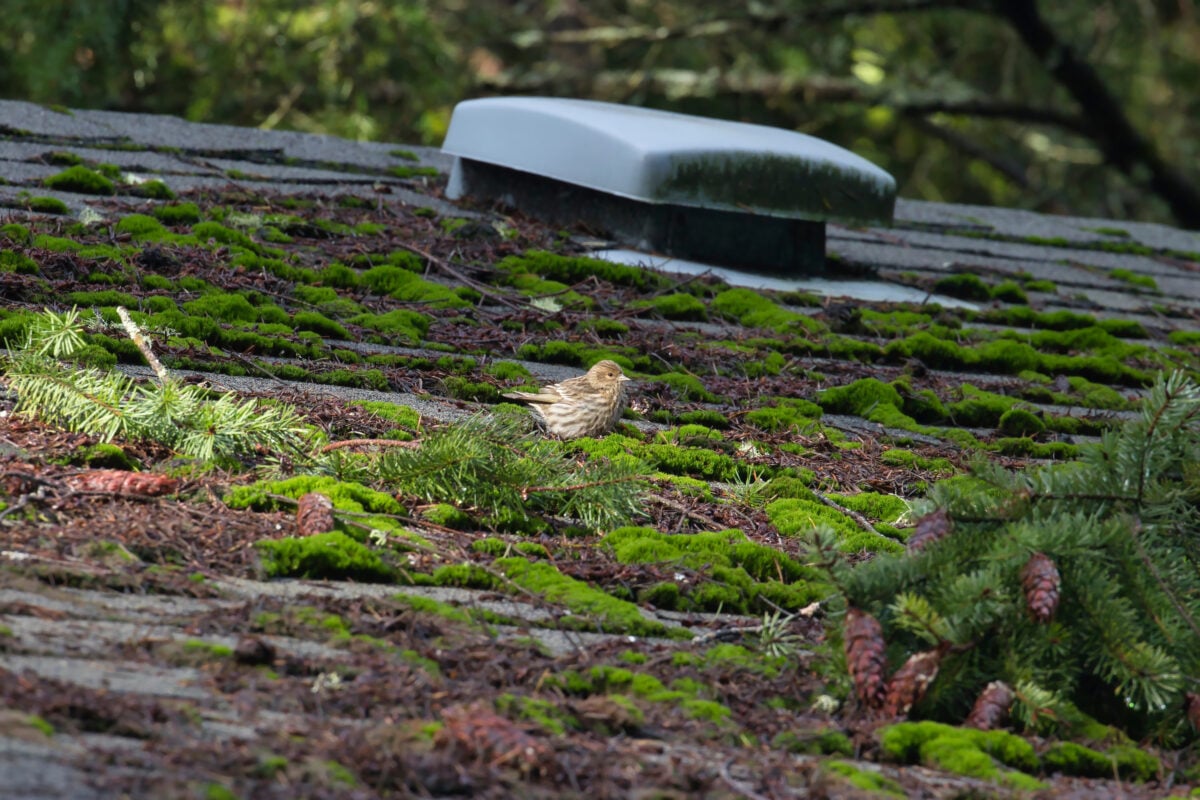
Moss doesn’t need much to survive. It thrives wherever moisture lingers and sunlight is limited, which is why it often appears on sections of a roof that stay cool and damp long after a storm passes.
- Shade: Overhanging oaks, pines, and tall neighboring structures block the sun that would normally dry your roof.
- Moisture: Morning fog, lingering dew, and winter rain give moss the water it needs to spread.
- Debris: Leaves and pine needles trap soil and hold water against the roof surface.
- Roof orientation: Slopes facing north get less direct sun and usually grow moss first.
Although moss looks soft, it isn’t harmless. According to the Oregon State University Extension Service, moss on asphalt and metal roofs can lift shingles and let water seep into the layers underneath. Once water reaches the underlayment and decking, a few small green patches can lead to rot and leaks inside your home.
6 Steps for Removing Moss Before the Rain Arrives
Timing matters because moss removal and treatment work best when the roof is dry and the weather is mild. Early fall gives you time to clean things up, let treatments work, and handle any repairs before the first big storm.
- Inspect from the ground first: Use binoculars to spot moss patches, lifted shingles, cracked tiles, or clogged gutters before you ever climb a ladder.
- Set up safely: Place your ladder on firm, level ground and wear shoes with good grip. Skip the job entirely if your roof is steep or more than one story high.
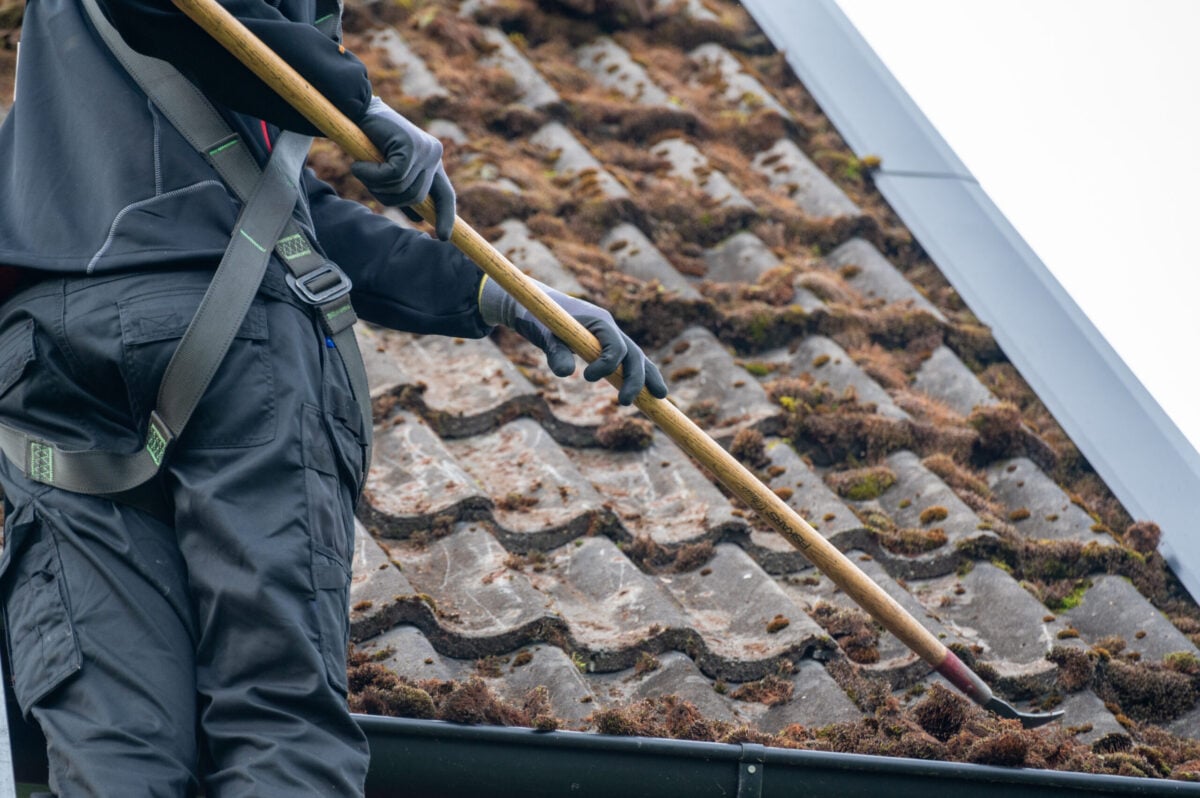
- Remove loose growth gently: Brush moss downward with a soft bristle brush or plastic scraper. Working with the direction of the shingles keeps you from prying them up.
- Apply a roof safe treatment: Spray a moss treatment made with zinc sulfate or potassium salts of fatty acids. Avoid zinc products if your home has copper gutters or flashing.
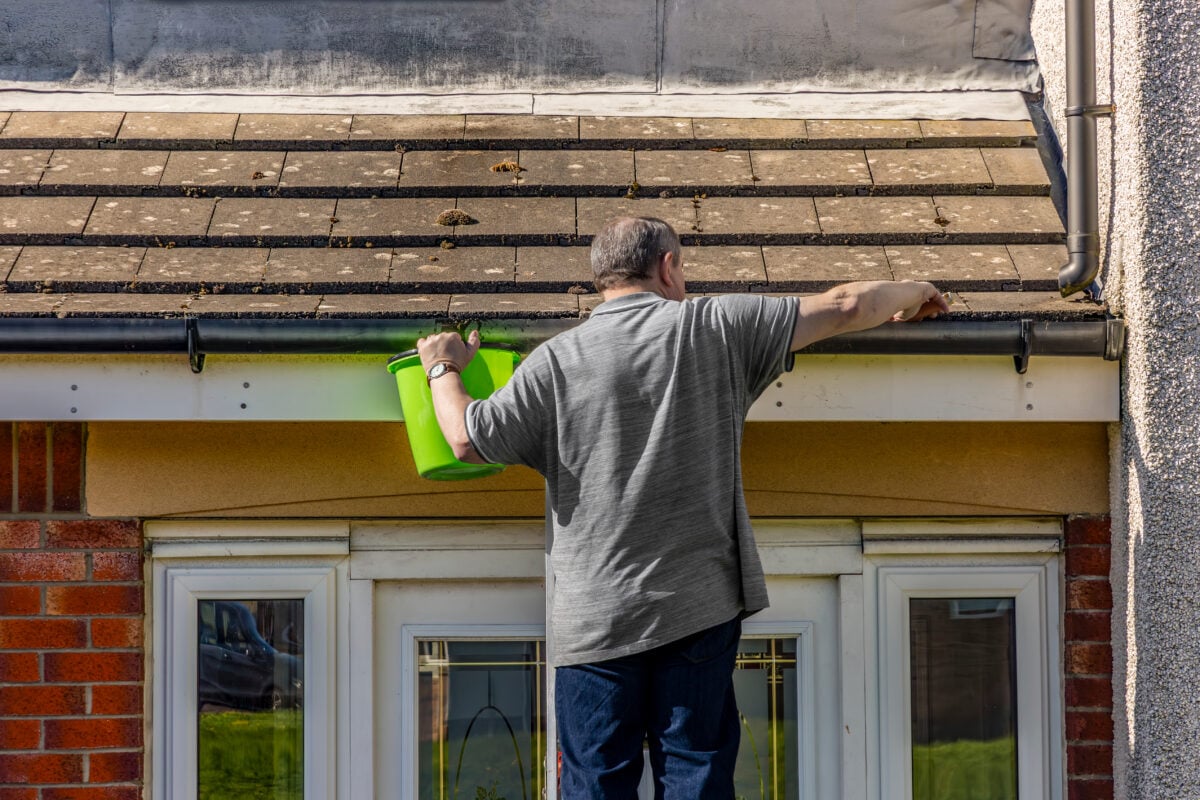
- Clear gutters and downspouts: Scoop out dislodged moss, needles, and leaves so rainwater can drain freely once storms begin.
- Schedule a professional inspection: Have a roofer check for loose shingles, damaged tiles, and worn flashing that moss may have been hiding.
Comparing Common Moss Removal Methods
Not every approach to removing moss is equally safe for your roof. The table below shows how the most common options compare so you can choose the right one for your home.
| Method | Best For | Risk to Roof | What to Know |
| Soft brush or plastic scraper | Light surface growth | Low | Work gently and brush downward to protect granules |
| Zinc sulfate treatment | Moderate to heavy moss | Low to moderate | Corrodes copper and can harm nearby plants |
| Potassium salt (soap) treatment | Homes with pets or gardens | Low | Biodegradable but may need repeat applications |
| Pressure washing | Not recommended | High | Can strip granules, crack tile, and force water under shingles |
| Professional inspection | Heavy moss or visible damage | Very low | Finds hidden damage and handles repairs properly |
Keeping Moss From Coming Back
Removing moss is only half the job. If the conditions that caused it stay the same, it will return. A few simple habits can make a big difference over time.
- Trim nearby trees: Cutting back overhanging branches lets sunlight reach your roof and dry it faster.
- Keep gutters clear: Clean gutters twice a year so water and debris don’t back up onto the roof edge.
- Blow off debris regularly: Use a leaf blower on a low setting to clear needles and leaves before they break down.
- Book regular checkups: An annual roof inspection catches small problems before they grow into big ones.
We’re proud to serve home and business owners in Julian, CA, and nearby communities with roof repairs, full reroofs, and more. Our crews understand how mountain shade and wetter backcountry winters can keep roofs damp, and we plan every repair around those conditions.
Common FAQs About Roof Moss
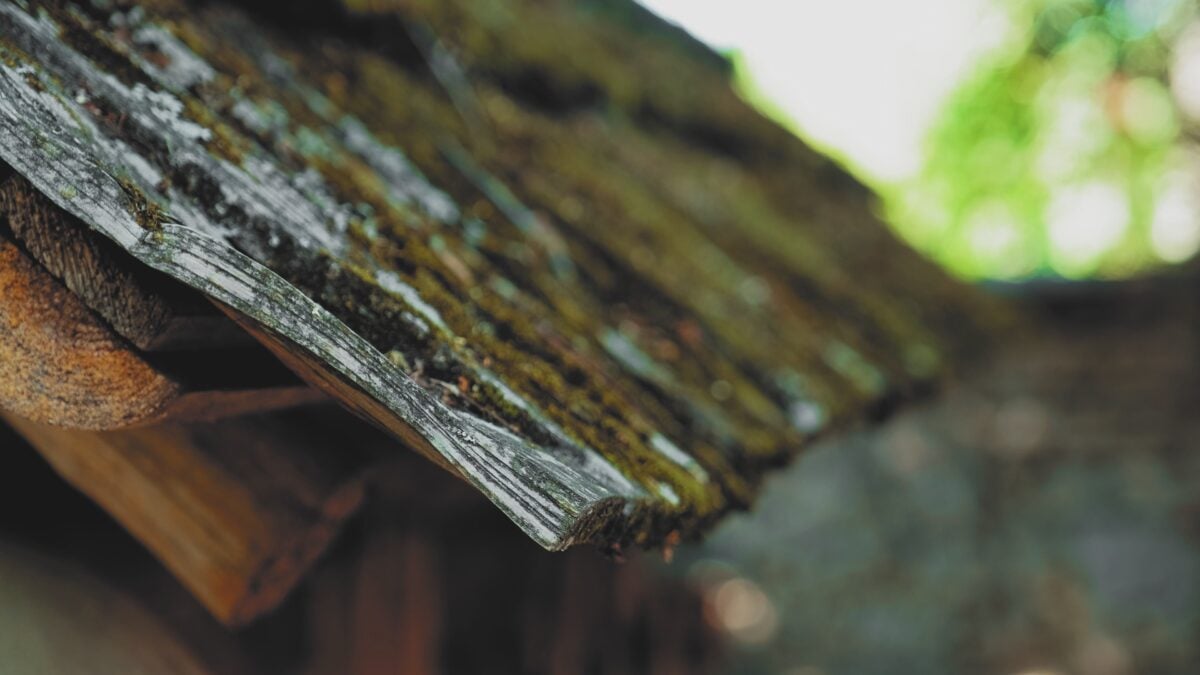
Homeowners often have questions once they notice green growth on their roofs. Here are answers to a few of the most common ones.
Is moss really bad for my roof?
Yes, moss can shorten the life of your roof even though it grows slowly. It acts like a sponge, holding water against shingles and tile for days after a storm. As it spreads, it can creep under shingle edges and lift them, which opens a path for water to reach the underlayment and roof deck. Over time, that trapped moisture can lead to rot, mold, and leaks. Catching moss early and removing it gently keeps a small maintenance task from turning into a costly repair.
Can I pressure wash moss off my roof?
Pressure washing is one of the most common mistakes homeowners make. The force of the water can strip protective granules off asphalt shingles, crack or loosen roof tiles, and push water under the roofing material where it causes hidden damage. It may clear moss quickly, but the damage it leaves behind often costs more than the moss ever would. A soft brush combined with a roof safe treatment is a much gentler option that protects the lifespan of your roof.
When is the best time to remove roof moss?
Early fall is ideal in San Diego County because the weather is still dry and mild. Most moss treatments work best when they can sit on a dry roof for a day or two without being rinsed away. Removing moss before the rainy season also gives you time to find and repair loose shingles or cracked tiles before storms put your roof to the test. Waiting until winter usually means working on slippery surfaces and dealing with leaks at the same time.
Will moss come back after I remove it?
It can, especially if your roof stays shaded and damp. Treatments kill existing moss, but spores travel easily on the wind and will settle again wherever conditions allow. The best way to slow regrowth is to change the environment by trimming trees, clearing debris, and keeping gutters flowing. Regular inspections help too, since a roofer can spot early growth and any wear it has caused. With consistent upkeep, most homeowners can keep moss under control for years.
Head Into the Rainy Season Confident With Streamline Roofing
A clean roof heads into winter ready to shed water the way it was designed to. If you’ve found moss, lifted shingles, or cracked tiles, Streamline Roofing is here to help. Every project starts with a free, no pressure estimate handled by our owner, who has been roofing since 2001 and will walk you through exactly what he finds. We deliver proposals the day after your inspection, stay in touch at every step, and leave your property as tidy as we found it. As Owens Corning certified installers with an A+ rating from the Better Business Bureau, we take pride in doing the job right the first time. Don’t let moss follow you into the rainy season. Get your roof checked before the first storm hits and enjoy a drier, calmer winter.