Roofing
Roof Storm Damage: 8 Signs You Should Never Ignore
Roof storm damage can develop after high winds, heavy rain, hail, or flying debris, and some of the most serious problems are not immediately visible from the ground. What looks like a few loose shingles can expose the roof deck, allow moisture inside, and eventually result in costly structural repairs. When severe weather puts your home at risk, having a stronger roof over your home starts with identifying damage early and making the right repairs. Below are some of the most important issues homeowners should know after severe weather:
- Shingle damage: Missing, cracked, or lifted roofing materials
- Water intrusion: Leaks and moisture entering the roofing system
- Flashing problems: Loose or damaged protection around vulnerable areas
- Structural concerns: Damage affecting the roof deck or supporting components
- Hidden damage: Problems that may not be obvious without a professional inspection
Why Roof Storm Damage Should Be Addressed Quickly
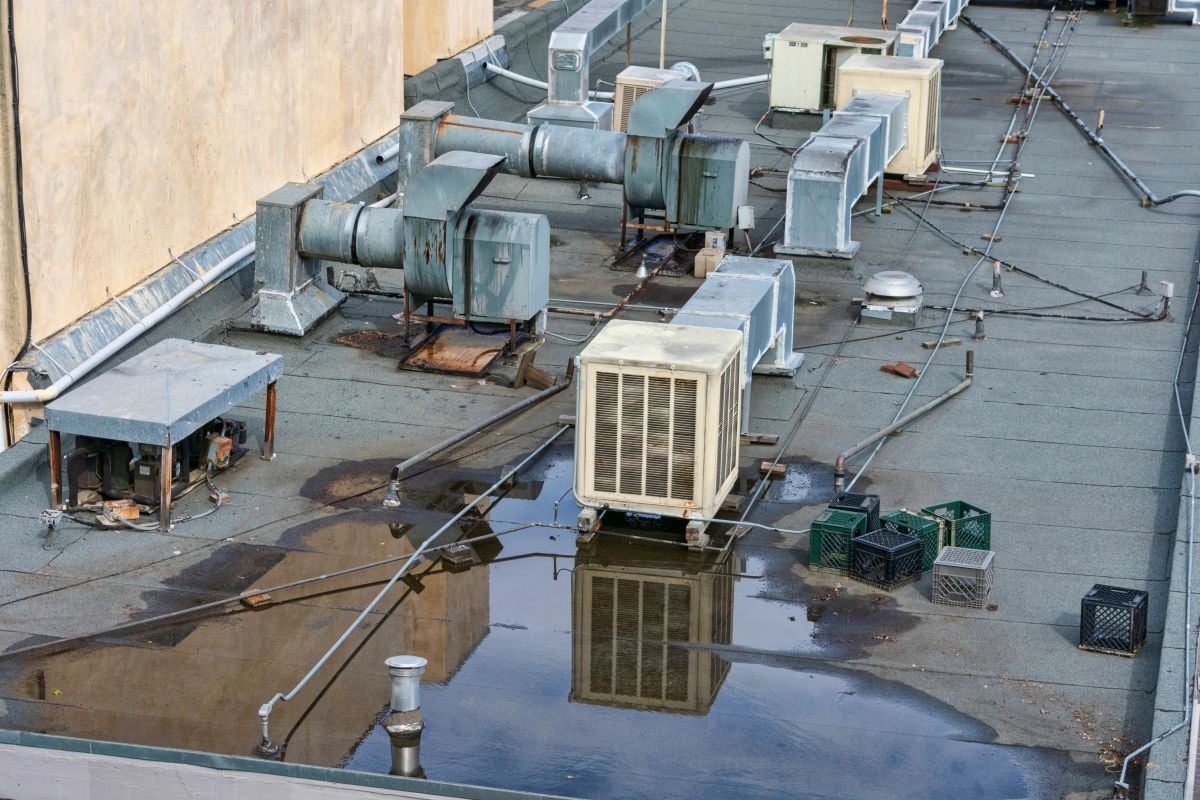
Storm damage does not always cause an immediate leak. A damaged shingle, loosened flashing, or small opening can initially appear minor while allowing moisture to work its way beneath the roof surface.
Over time, repeated exposure to rain can damage underlayment, decking, insulation, ceilings, and other parts of the home. Prompt attention can make the difference between a focused roof repair and more extensive work later.
What Causes Storm Damage to a Roof?
Different types of severe weather affect roofing materials in different ways. The age, condition, installation quality, and material of the roof can also determine how well it withstands a storm.
Common causes include:
- High winds: Lift shingles and loosen roofing materials
- Heavy rain: Finds openings and vulnerable areas in the roof
- Hail impacts: Crack, dent, or remove protective granules from shingles
- Flying debris: Branches and other objects can puncture roofing materials
- Falling trees: Can cause significant structural and surface damage
A roof may experience more than one type of damage during the same storm, which is why checking the entire roofing system is important.
8 Signs of Roof Storm Damage You Should Never Ignore
Recognizing storm-related problems early gives homeowners an opportunity to address vulnerable areas before additional rain or wind causes further damage. Some signs are visible from the ground, while others may only become apparent inside the home.
1. Missing or Lifted Shingles
Strong winds can loosen, lift, or completely remove shingles from the roof. Missing shingles leave the protective layers beneath them more exposed to rain and additional weather.
- Bare areas: Sections of the roof are visibly missing shingles
- Lifted edges: Shingles no longer sit flat against the roof
- Shingle debris: Pieces of roofing material appear around the property
Even one missing shingle can create a vulnerable area, particularly if the underlayment beneath it has also been damaged.
2. Cracked or Damaged Shingles
Not every storm-damaged shingle disappears from the roof. Hail, debris, and wind can crack or split shingles while leaving them in place, making the damage easier to overlook.
- Visible cracks: Shingles have splits or broken sections
- Loose pieces: Portions of shingles move or appear unstable
- Surface damage: Impact marks indicate possible hail or debris damage
Damaged shingles may no longer shed water as effectively as they should. Continued weather exposure can make these areas progressively worse.
3. Excessive Granule Loss
Asphalt shingles have protective granules that help shield them from sunlight and weather exposure. Hail and heavy storms can knock these granules loose, reducing the shingle’s protective capabilities.
- Bare patches: Dark or smooth areas appear on shingles
- Gutter buildup: Large amounts of granules collect in gutters
- Uneven appearance: Sections of the roof look different after a storm
Some granule loss naturally occurs as shingles age, but sudden or concentrated loss following severe weather may indicate storm damage.
4. Damaged or Loose Flashing
Flashing protects some of the most vulnerable areas of a roof, including valleys and spaces around chimneys, vents, and skylights. Strong winds or flying debris can bend, loosen, or separate these components.
- Bent flashing: Metal sections appear warped or displaced
- Loose edges: Flashing has pulled away from the roof
- Exposed gaps: Openings appear around roof penetrations
Because flashing directs water away from seams and transitions, even relatively small damage can create a path for water intrusion.
5. Water Stains or Active Roof Leaks
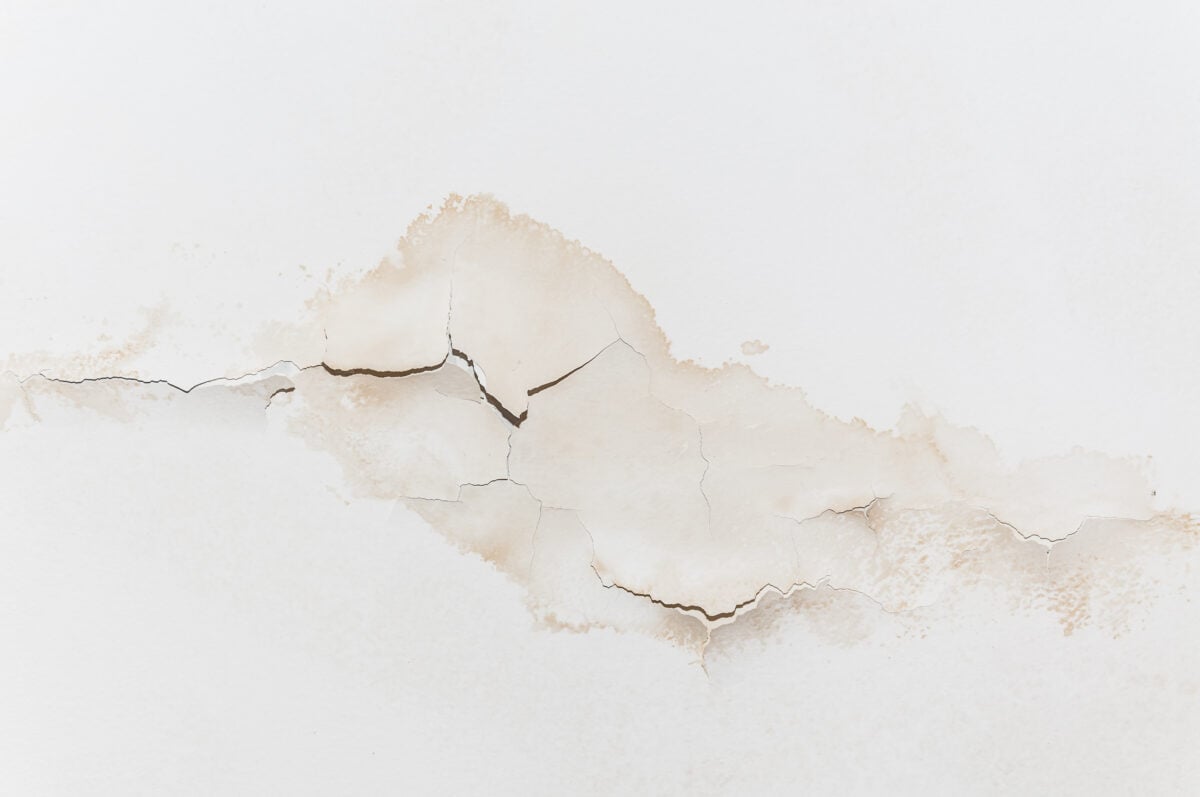
Interior water damage is one of the clearest indications that a storm may have compromised the roofing system. Water can travel along rafters and other structural components, so the location of a ceiling stain does not always identify the exact source of the leak.
- Ceiling stains: Brown or yellow discoloration appears indoors
- Damp insulation: Moisture is present in the attic
- Active dripping: Water enters during or after rainfall
Roof leaks should be addressed quickly. Continued moisture can damage drywall, insulation, wood framing, and other materials even when the original opening in the roof is relatively small.
6. Dents From Hail or Flying Debris
Hailstorms can affect shingles, metal components, vents, gutters, and flashing. Larger hailstones or flying debris may cause obvious dents, but smaller impacts can also weaken roofing materials without producing dramatic visual damage.
- Impact marks: Circular or irregular marks appear on shingles
- Dented components: Gutters, vents, or flashing show new indentations
- Soft spots: Areas of asphalt shingles feel compromised
A professional roof inspection can help determine whether impact damage is cosmetic or has affected the roof’s ability to protect the home.
7. Sagging or Structural Changes
A roofline that suddenly looks uneven after a severe storm requires immediate attention. Falling branches, water saturation, and major impacts can damage the roof deck or supporting structure beneath the roofing materials.
- Visible dips: Sections of the roof appear lower than surrounding areas
- Uneven roofline: Previously straight sections appear warped
- Interior movement: New ceiling cracks or other structural changes appear
Structural damage is not something homeowners should attempt to inspect by walking on the roof. A compromised area may not safely support additional weight.
8. Damaged Gutters, Fascia, or Roof Edges
Storm damage can extend beyond the main roof surface. Gutters, fascia, soffits, and roof edges all contribute to managing water and protecting vulnerable parts of the structure.
- Loose gutters: Sections pull away from the home
- Damaged fascia: Boards show cracks, impact damage, or separation
- Roof-edge damage: Shingles or other materials appear lifted or broken
Damage around the roof perimeter can also provide clues about what happened elsewhere. For example, hail dents in gutters may indicate that the roof surface was exposed to similar impacts.
What to Do After a Severe Storm
Once the weather has passed, homeowners should check their property from a safe location rather than immediately climbing onto the roof. Taking action early can help document damage and prevent smaller problems from becoming more serious.
Important steps include:
- Inspect from the ground: Look for missing shingles, debris, or obvious changes
- Check the attic: Look for moisture, stains, or daylight entering through the roof
- Document damage: Photograph visible problems for your records
- Protect the interior: Move belongings away from active leaks when possible
- Schedule an inspection: Have questionable areas evaluated professionally
Avoid walking on a wet or visibly damaged roof. Storm conditions can leave roofing materials slippery, unstable, or structurally compromised.
Can Storm Damage Lead to Roof Replacement?
Not every storm-damaged roof requires replacement. Localized shingle damage, minor flashing problems, and smaller leaks may be repairable when the rest of the roofing system remains in good condition.
A roof replacement may become more appropriate when damage affects a large portion of the roof, the decking or structure has been compromised, or the existing roof was already approaching the end of its service life. The extent of damage, roof age, material condition, and repairability should all be considered before deciding.
Preventing Future Storm Damage
Homeowners cannot prevent severe weather, but routine maintenance can improve a roof’s ability to handle it. Identifying weakened materials before the next storm reduces the chance that wind or rain will turn an existing vulnerability into a larger problem.
Schedule Routine Roof Inspections
Regular inspections can identify loose shingles, deteriorated flashing, damaged sealants, and other concerns before severe weather arrives. An inspection after a particularly strong storm can also reveal damage that is difficult to see from the ground.
Keep Gutters and Drainage Areas Clear
Gutters help move rainwater away from the roof and foundation. Leaves, branches, and other debris can restrict drainage and cause water to back up around roof edges during heavy rainfall.
Trim Nearby Trees
Overhanging branches can scrape roofing materials or break during high winds. Keeping trees appropriately trimmed reduces the amount of debris that can strike or accumulate on the roof during a storm.
Frequently Asked Questions About Roof Storm Damage
Storm-related roofing problems are not always easy to identify immediately. These common questions can help homeowners determine when their roof may need professional attention.
How soon should I inspect my roof after a storm?
Check the roof from the ground once conditions are safe. If you notice missing shingles, debris impacts, water stains, or other changes, schedule a professional inspection rather than climbing onto a potentially damaged roof yourself.
Can a roof have storm damage without leaking?
Yes. Wind, hail, and debris can damage shingles, flashing, and other components without causing an immediate visible leak. Water intrusion may develop later as damaged materials experience additional rain and weather exposure.
Does one missing shingle need to be repaired?
Yes. Even one missing shingle can expose the materials beneath it and increase the risk of water intrusion. A small repair performed early may prevent damage from spreading to the roof deck or surrounding shingles.
How can I tell if hail damaged my roof?
Possible signs include missing granules, impact marks, cracked shingles, and dents in gutters or metal roof components. Because hail damage can be subtle, a professional inspection is often the safest way to determine its extent.
Should I replace or repair a storm-damaged roof?
The right approach depends on the extent of the damage, age of the roof, condition of surrounding materials, and whether structural components were affected. Localized problems may be repairable, while widespread damage can make replacement the more practical long-term option.
Protect Your Home After a Storm With Streamline Roofing
Roof storm damage can become more expensive and disruptive when vulnerable areas are left exposed to additional weather. Streamline Roofing can inspect your roofing system, identify storm-related problems, and recommend repairs or replacement based on the condition of your home. If severe weather has recently moved through your area, schedule a professional roof assessment before hidden damage has an opportunity to spread.